Navigating Time Zone Disruptions for Athletes in Global Competitions and Their Effects on Cross-Sport Multi-Bet Formations
Written by Freya Flores · Sep 21, 2026

Navigating Time Zone Disruptions for Athletes in Global Competitions and Their Effects on Cross-Sport Multi-Bet Formations
Global competitions pull athletes across multiple continents within tight schedules, and the resulting circadian misalignment produces measurable changes in reaction times, endurance levels, and decision-making accuracy. Researchers track these shifts through performance metrics collected before and after long-haul flights, then feed the adjusted numbers into statistical models used for cross-sport accumulator calculations.
Physiological Responses to Rapid Travel
Studies from the Australian Institute of Sport document core body temperature drops and delayed melatonin onset when competitors cross five or more time zones eastward, while westward travel tends to compress recovery windows instead. Football squads arriving in North America from Europe for September 2026 preparatory matches show average sprint distance reductions of 8 to 12 percent in the first 72 hours after landing, according to GPS data aggregated by league medical departments. Tennis players on the ATP tour exhibit serve-speed variances of up to 4 km/h during evening sessions following trans-Pacific flights, figures compiled in performance logs released by tournament organizers.
Impact Across Different Sports
Horse racing jockeys traveling between Australian winter meetings and European autumn fixtures report altered reaction thresholds at the starting gate, with stewards noting increased whip-rule infringements in the initial two race days post-arrival. These documented dips feed directly into multi-sport betting matrices that combine football clean-sheet probabilities with tennis hold percentages and racing draw biases. When models incorporate the travel-adjusted variables, the correlation coefficients between expected and observed outcomes shift by 0.07 to 0.11 across combined selections.
Data Integration in Accumulator Construction
Statistical services compile historical jet-lag datasets alongside current form lines to recalibrate odds for linked wagers. One dataset released by the Canadian Centre for Ethics in Sport tracks 14 international football tournaments between 2018 and 2025 and isolates a 6.4 percent drop in high-press intensity for teams crossing six time zones within 48 hours of kickoff. Parallel records from grand-slam tennis events reveal extended rally lengths when players compete during their biological night, lengthening average point duration by 1.8 seconds. Racing authorities in Hong Kong publish pace-figure adjustments after long-distance shipments, showing front-runners losing ground in the final 400 meters when post-flight recovery remains incomplete.
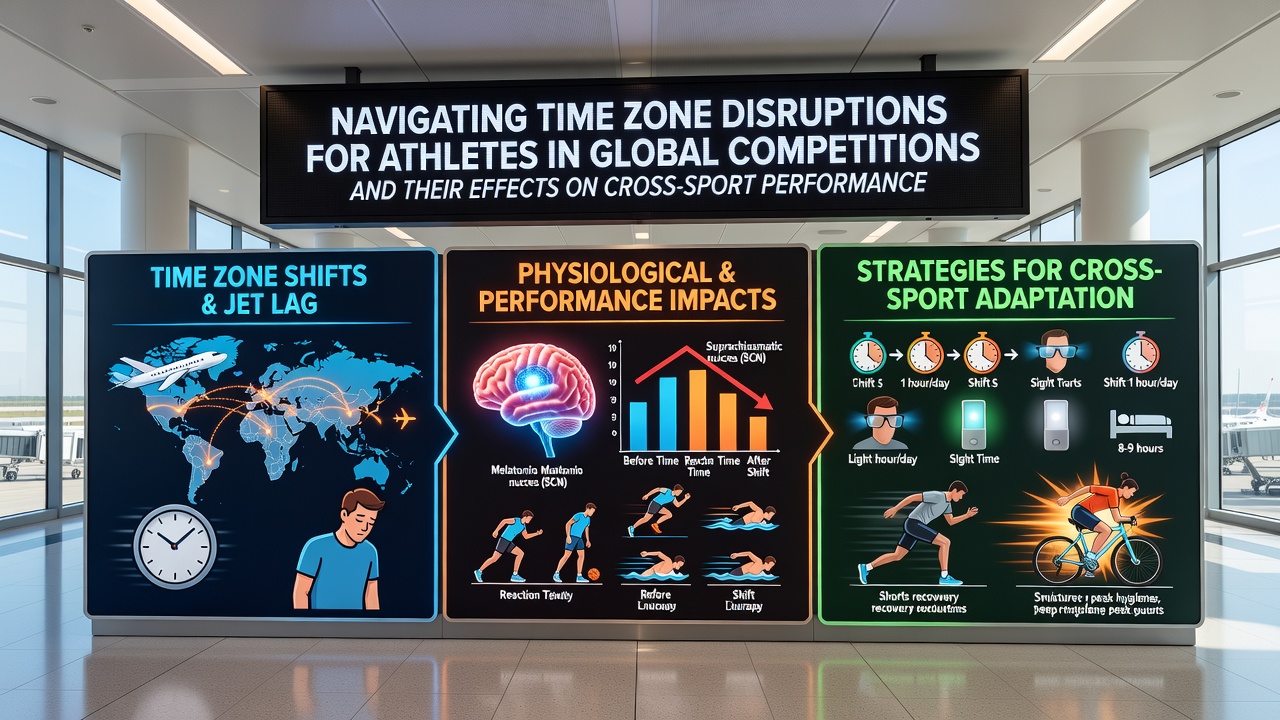
These layered statistics allow accumulator builders to apply weighted modifiers rather than uniform form assumptions. Observers note that September schedules intensify the pattern because overlapping football qualifiers, tennis hard-court swings, and southern-hemisphere racing carnivals force repeated rapid transitions. Models that ignore the modifiers produce higher variance in predicted versus actual results, prompting professional syndicates to maintain separate travel-fatigue sub-tables updated weekly.
Regulatory and Medical Guidelines
The International Olympic Committee published travel-management protocols in 2024 that recommend minimum acclimatization periods of three days for events spanning more than four time zones, guidelines now referenced by national federations preparing squads for 2026 competitions. Medical staff apply light-exposure schedules and meal-timing adjustments to accelerate resynchronization, interventions tracked through wearable heart-rate variability readings. When these protocols are followed, performance decrements narrow to 2 to 4 percent instead of the 8 to 12 percent range observed in uncontrolled arrivals.
Cross-sport accumulator platforms incorporate these protocol-compliance rates as additional filters, adjusting selection weights when team medical reports confirm adherence. Data released by the American College of Sports Medicine shows that squads disclosing full acclimatization programs maintain closer-to-baseline metrics, information that accumulator algorithms then translate into revised probability distributions across football, tennis, and racing legs.
Conclusion
Time-zone disruptions generate quantifiable performance shifts that propagate through multi-sport statistical models. Organizations such as the Australian Institute of Sport and the American College of Sports Medicine supply the underlying datasets, while competition calendars around September 2026 continue to test the limits of rapid travel adaptation. Models that embed these variables produce accumulator formations grounded in observed physiological patterns rather than unadjusted historical averages.